Senior Engineering Interview Handbook / Chapter 16
The Recruiter Screen
A senior-engineer guide to recruiter screens: role alignment, location, work authorization, compensation expectations, notice periods, level calibration, process questions, and communicating constraints professionally.
Preparing audio…
Audio edition
The Recruiter Screen
Page tools
What this call establishes
The recruiter screen is the first conversation in which your search becomes operational. A resume can suggest a fit. This call decides whether the company will route you toward a particular manager, level, compensation band, location policy, and interview plan.
That work is easy to underestimate because the call is usually short and rarely technical. Yet even a strong technical loop cannot easily repair an opening record that says “open to anything senior,” attaches you to the wrong team, or leaves a hard constraint undiscovered.
Imagine the note a recruiter might forward:
Senior backend engineer targeting hands-on product-infrastructure work. Strongest evidence is billing migration, rollout safety, and production ownership. Remote US, authorized to work, four-week notice. Compensation target overlaps the senior band. Wants to confirm whether the team needs service ownership, platform migration, or new product delivery.
That note does not win the job. It gives the rest of the company the right candidate to evaluate.
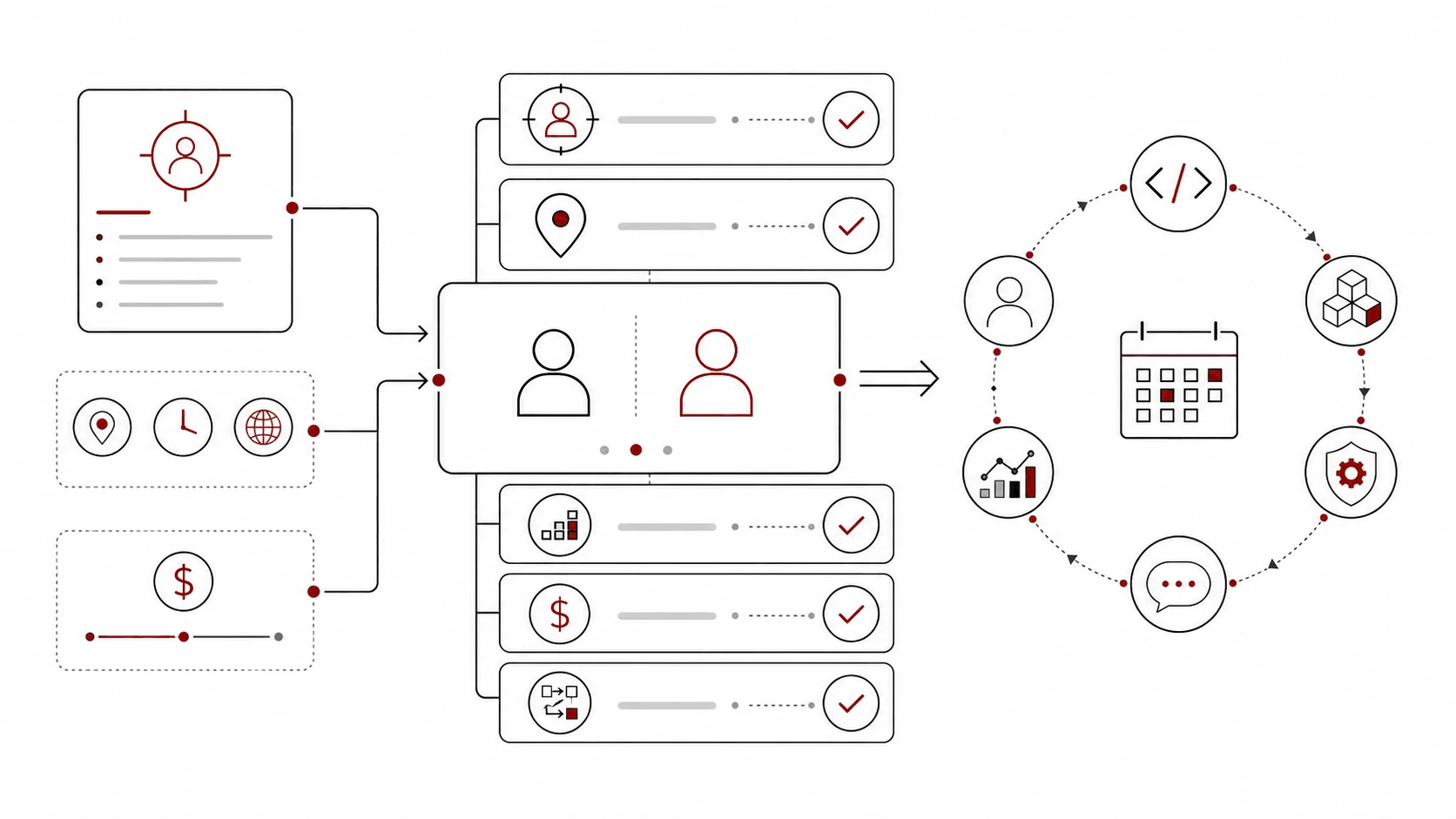
Senior-level performance: prepare what only you can know
The previous chapter produced your career narrative. Do not build another one for the recruiter. Bring its smallest useful version: the kind of engineer you are, two evidence anchors, and the work you want next.
Then add the facts that no recruiter can recover from your resume:
- where you can work and whether remote, hybrid, relocation, travel, or time-zone requirements are firm;
- how you can accurately describe your work-authorization or sponsorship need;
- your notice period and realistic interview availability;
- the compensation range, floor, and package trade-offs for this search;
- the level and shape of work you would accept;
- the unknowns that would change your decision or preparation.
Keep these on one private card. The card is not a script. It prevents an unexpected question from making you invent a constraint, a number, or a career direction during the call.
Know which facts are hard stops and which are preferences. “Remote only” is different from “remote preferred.” A four-week notice period is different from a hoped-for start date. A compensation floor is different from a target. If you blur those distinctions for yourself, you will blur them for the recruiter.
Operating model and response quality: give the recruiter something routeable
An opening answer should establish present shape, evidence, target scope, and one honest question.
“I am a senior backend engineer focused on reliability-sensitive product workflows. My strongest recent work is a billing retry redesign and a notification migration, including rollout and production risk. I am looking for a hands-on senior role with service ownership. The commerce-platform work in this posting looks close; what I cannot tell is whether the immediate need is new product delivery, stabilization, or migration.”
The answer carries the career story into a live decision. It is also easy to compress without losing its meaning.
“I have ten years across the stack and am open to different senior opportunities” may be accurate, but it transfers the work of positioning back to the recruiter. If several role shapes would genuinely suit you, name the common work and the boundary: “I am open to backend product or platform teams, provided the role includes hands-on service ownership rather than primarily program coordination.”
The screen is a conversation, so stop after you have given the recruiter a useful direction. Architecture detail can wait for the hiring manager or a later round. A recruiter who understands your fit can ask for more; one buried in chronology cannot route you better.
Make constraints boring
Constraints sound strongest when they are ordinary facts. State the boundary, name what is workable, and ask for the missing confirmation.
“I am targeting remote roles. Planned team onsites are fine; a weekly office cadence is not.”
“I can overlap with Pacific hours through late afternoon. A standing late-evening schedule would not be workable.”
“I have a four-week notice period after signing. That is the earliest start date I can promise responsibly.”
“I can schedule two interview blocks each week, and I would prefer at least 48 hours between technical rounds.”
This language neither apologizes nor issues a challenge. It lets both sides decide whether the role can accommodate the fact.
Work authorization requires more care because the exact answer depends on jurisdiction, immigration status, employer policy, role location, and timing. A recruiter can confirm whether the role supports the required hiring process; they should not be asked to improvise legal advice. State only what you know accurately:
“I am authorized to work in the US and do not require employer sponsorship.”
“I would require employer sponsorship for this role. Can this team and location support that before we schedule a full loop?”
“My authorization has timing conditions. I would need the recruiting or immigration team to confirm the process before technical scheduling.”
If your situation is uncertain, get qualified advice and use the language appropriate to it. Do not substitute nationality, citizenship, accent, school, or a previous employer for an accurate statement about the hiring requirement.
The same discipline applies to accessibility and scheduling needs. Ask for the condition that allows you to participate; do not turn the recruiter screen into a defense of why you need it.
Discuss compensation as compatibility
The screen is early for negotiating an offer and late for pretending compensation does not matter. Its job is to discover whether the approved range and your search can plausibly meet.
Before the call, decide:
- the total-compensation range you are targeting;
- the floor below which you would decline this role;
- how you value base, bonus, equity, benefits, flexibility, stability, and risk;
- which trade-offs could move the boundary.
Ask for the approved band before supplying unnecessary precision when the conversation allows:
“I want to make sure the role and my search overlap before either side invests in the loop. What is the approved compensation range for this level, and how does location affect it?”
If the recruiter needs your expectation first, answer the question you have prepared:
“For the right senior scope, I am targeting total compensation around [range], depending on level, equity structure, location policy, and benefits. How does that compare with the approved band?”
When asked about current compensation, you can return to the proposed job:
“I am evaluating this move against the role’s scope and package. My target for this search is [range], depending on level and structure.”
A wide range needs interpretation. Ask where the company expects a senior hire to land and which components or leveling decisions create the spread. A range below your floor deserves a calm exit or a specific question about real flexibility—not an argument and not a hope that the mismatch will repair itself after five interviews.
Compensation and level belong in the same discussion. A higher title with smaller ownership may be wrong for the search; a down-level may change scope, band, and progression together. Do not compare the money while leaving the work undefined.
Calibrate level from the work
Companies use “senior” for very different jobs. Some expect ownership of one service and consistent delivery. Others expect cross-team migration leadership, technical direction, mentoring, or staff-shaped influence while still calling the role senior.
Ask questions that expose the work beneath the title:
- What problem should this person own in the first six months?
- How hands-on is the role expected to remain?
- Which decisions can a strong engineer in the role make without daily direction?
- Is the need service ownership, feature delivery, migration leadership, platform adoption, or broader technical strategy?
- What evidence separates a senior hire from someone placed one level below?
- When and by whom is final level decided?
“You will lead projects and mentor people” is an opening, not yet an answer. Listen for ownership boundaries, architectural decisions, production responsibility, stakeholders, and the size of ambiguity the team expects the person to absorb.
If the recruiter cannot supply that detail, ask whether the hiring-manager conversation can resolve it before the full loop. Some uncertainty is harmless at this stage. Uncertainty about the actual job is not.
Ask process questions that change preparation
Process discovery should tell you how to prepare. Confirm the planned stages, round lengths, interviewer roles, scheduling sequence, tools, permitted resources, breaks, and decision path.
A useful question is specific about why the answer matters:
“Which environment does the coding round use, and which resources—documentation, personal notes, or AI tools—are permitted? I want to practice under the actual constraints.”
For system design, ask whether the round is general or tends to reflect a product or infrastructure domain. For a project deep dive, ask whether the company expects slides, a written artifact, or a verbal walkthrough. For a concentrated interview day, ask about breaks and whether rounds can be separated when the schedule would impair your performance.
Policies change, and recruiters sometimes do not have the answer on the call. Ask for written confirmation rather than relying on precedent from another company. If a missing answer changes only how you practice, continue while it is being resolved. If it changes whether you are eligible or willing to take the role, resolve it before committing to a large loop.
Worked example: Priya keeps the conversation on its real work
Priya is considering a senior backend role on a commerce platform. Her strongest evidence is a subscription migration, a payment-retry redesign, and checkout on-call ownership. She wants a hands-on senior IC role, works remotely in the US, has a four-week notice period, and already knows the compensation boundary for this search.
She opens with the fit:
“The role looks close to my recent work. I have been owning backend commerce systems where correctness and operational reliability matter. Is the immediate need mainly service stabilization, migration out of the legacy billing path, or broader platform strategy?”
The recruiter explains that the team needs someone to stabilize checkout while leading a gradual migration. Priya now has a reason to continue and a useful detail for the hiring manager.
She asks how hands-on the role remains and what would distinguish the expected senior scope from the level below. The recruiter can describe the first-six-month problem but not the leveling process, so Priya asks for that detail in follow-up rather than turning the call into a title debate.
When compensation comes up, she gives her prepared target and asks for the band. It overlaps. She states her remote boundary, authorization, notice period, and available interview blocks without a story around any of them.
The recruiter describes live coding, system design, a project deep dive, and behavioral interviews. Priya asks whether coding uses a shared editor, whether documentation is permitted, and whether the project deep dive requires prepared material. The recruiter needs to check two of those points.
Priya ends by summarizing:
“The role sounds worth continuing: hands-on senior backend ownership, with checkout reliability and a legacy migration as the first problem. Remote US works, our compensation ranges overlap, and I can start after four weeks’ notice. Once you confirm the coding environment, deep-dive format, and leveling process, I can choose sensible dates for the next rounds.”
She has not won the job. She has made the later rounds about the right role and kept three unknowns visible.
Failure modes: end with a decision, not momentum
At the end of the call, decide whether to continue, wait for clarification, pause, or decline.
Continue when the role, constraints, compensation, and process fit well enough to justify the next investment. Continue after clarification when one likely-resolvable answer is missing. Pause when level, authorization, location, or compensation is too uncertain to schedule a full loop. Decline when a hard mismatch is already confirmed.
Prestige is not a fifth decision. Neither is politeness. You can close a mismatch without damaging the relationship:
“I appreciate the context. The weekly office requirement and current band do not fit this search, so I do not think it makes sense to schedule the technical loop. The work itself sounds relevant, and I would be glad to stay in touch if a remote role opens with a closer range.”
After a call you intend to continue, write the forwarding note you believe the recruiter will send. If it is wrong or incomplete, repair it in a short message:
Thanks for the conversation. I am interested in continuing. My understanding is that this is a hands-on senior backend role focused first on checkout reliability and migration; remote US is workable; and the compensation range overlaps pending final level. Before we schedule the technical rounds, could you confirm the coding environment, project-deep-dive format, and when level is decided?
That message has one job: preserve the routing decision and unblock the next stage. It should not re-sell your whole career.
Practice: rehearse the blocker, then the flow
Run one imperfect recruiter screen
35 minThe complication matters. A smooth recital proves that you can remember sentences. A useful rehearsal proves that you can keep the record accurate when the answer is inconvenient.
Self-check before a serious screen
Check the card you will actually use:
- Can I state my target role and two evidence anchors in under a minute?
- Do I know which location, travel, time-zone, authorization, and notice-period facts are firm?
- Have I separated my compensation target from my floor and trade-offs?
- Can I describe the work I expect at this level without relying on the title?
- Do my process questions change preparation, scheduling, or a decision?
- Do I know which unknowns block a loop and which can wait?
- Can I state a constraint without apology, threat, or unnecessary biography?
- Will I leave with a decision and correct the written record if needed?
If you cannot name your hard stops, do that before taking more calls. Polished phrasing cannot rescue a decision you have not made.
Field reference
Field reference
Recruiter screen card
- Fit: role shape, two evidence anchors, desired next scope, one open question.
- Logistics: location, remote or hybrid boundary, time zone, travel, notice period, interview availability.
- Authorization: accurate current statement and any confirmation required.
- Compensation: target, floor, package trade-offs, approved band.
- Level: first-six-month problem, hands-on expectation, ownership boundary, decision process.
- Process: stages, timing, tools, resources, AI policy, deep-dive format, breaks.
- Blockers: facts that must be resolved before a full loop.
- Close: continue, clarify, pause, or decline; then write the forwarding note.