Senior Engineering Interview Handbook / Chapter 10
Choose the Right Role Before Preparing
A role-selection chapter for senior engineers: compare product, platform, backend, full-stack, infrastructure, generalist, specialist, startup, enterprise, hands-on, and quasi-managerial roles before investing preparation time.
Preparing audio…
Audio edition
Choose the Right Role Before Preparing
Page tools
What the role-choice process controls
Before you start practicing, decide what kind of senior role you are trying to win.
That sounds obvious until you look at the market. “Senior Software Engineer” can mean a backend product owner for checkout services, a frontend lead for a design-heavy collaboration product, a platform engineer building developer tooling, an SRE for critical infrastructure, a data systems specialist, a startup generalist, or a tech-lead-shaped IC who spends half the week aligning teams. The same title can ask for different proof, different stories, and different practice.
Experienced engineers often waste preparation because they skip this decision. They build a generic senior plan: some algorithms, some system design, some behavioral stories, a resume pass, and a hope that the loop will fit. That plan is comfortable because it postpones trade-offs. It is also the reason a capable backend engineer ends up surprised by frontend architecture probes, a product engineer underprepares for infrastructure depth, or a strong staff-shaped candidate sounds too abstract for a hands-on senior IC role.
Role choice is not self-limiting. It is evidence management. You are choosing where your strongest work can become visible senior signal, which gaps are acceptable in this search cycle, and which interview loops are expensive enough that they should not receive your best preparation weeks.
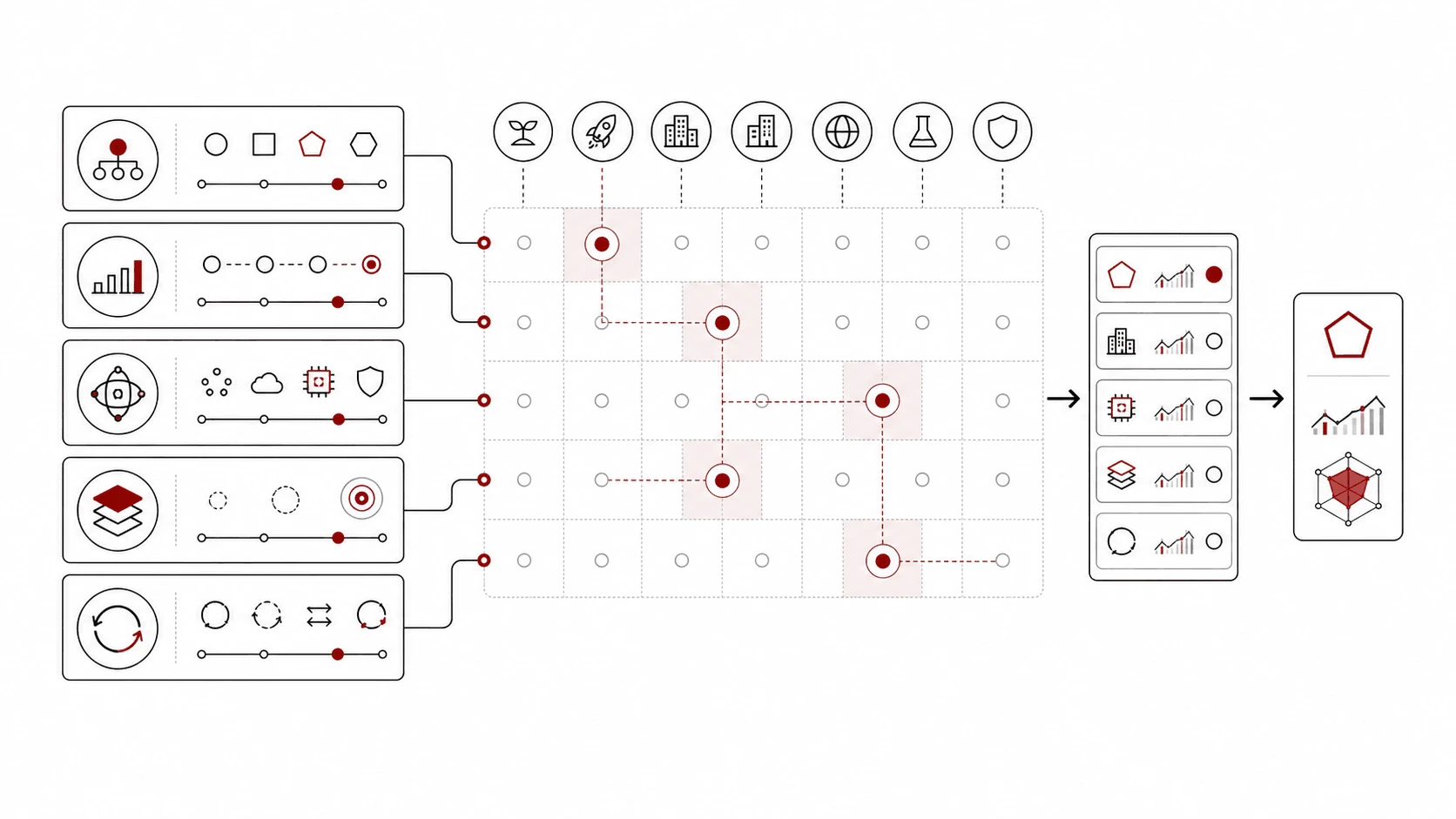
Write the target-role thesis under real constraints
The output of this work is a target-role thesis: a short operating statement you can use before you rewrite your resume, choose practice prompts, or ask a recruiter for loop details.
A weak thesis is mostly preference:
“I am open to backend, full-stack, platform, AI, fintech, startups, and big tech. I just want a senior role with interesting problems.”
A stronger thesis names fit, boundaries, and preparation branches:
“My primary target is senior backend or product-infrastructure roles where service ownership, migrations, reliability, and cross-team rollout matter. I am also open to developer-platform teams close to application engineers. I am not prioritizing pure runtime infrastructure or design-heavy frontend loops this cycle unless I make time for a separate preparation branch.”
That statement does several jobs. It tells you which postings deserve attention. It tells you which resume bullets should move up. It tells you which project stories to rehearse. It gives you language for recruiter screens. It also gives you permission to skip roles that are impressive but poorly matched to your current evidence.
Your thesis should answer five questions:
- What is the primary role cluster?
- What adjacent cluster is still credible?
- Which roles are out of scope for this campaign?
- What existing evidence makes the target believable?
- What preparation branches would a stretch role require?
The out-of-scope line is important. Senior candidates often overclaim flexibility because they do not want to close doors. A boundary does the opposite when it is well stated. It makes the rest of your interest more credible.
Role-selection workflow: map the role shape
Titles are too coarse. Map the work itself. Most senior engineering roles can be described by a handful of dimensions.
| Dimension | Question to answer | Preparation implication |
|---|---|---|
| Product versus platform | Is the role primarily creating user/customer outcomes or leverage for other engineers and systems? | Product roles need delivery, user, and business trade-offs. Platform roles need adoption, migration, operability, and internal-customer evidence. |
| Application versus infrastructure | Is the center of gravity business logic and workflows, or runtime, compute, networking, storage, deployment, and reliability? | Application loops often probe domain modeling and product sequencing. Infrastructure loops often probe systems depth, failure modes, capacity, and automation. |
| Backend, frontend, full-stack, mobile, data, or security | Which technical surface will be judged as core rather than helpful? | Core surfaces deserve targeted drills; secondary surfaces need honest ramp language. |
| Generalist versus specialist | Is breadth valued, or is the company buying a sharp capability? | Specialist roles punish vague enthusiasm; they need direct or adjacent proof. |
| Hands-on versus lead-heavy | Will the role spend most of its credibility through code and service ownership, or through technical direction and coordination? | Hands-on roles need current implementation fluency. Lead-heavy roles need decision records, influence, sequencing, and stakeholder examples. |
| Senior versus staff-shaped | Is the expected scope team-local ownership or multi-team strategy and standards? | Staff-shaped roles require broader influence evidence than ordinary senior IC loops. |
| Startup, scale-up, enterprise, or regulated environment | What operating model defines the work? | Startup roles reward ambiguity and speed; enterprise and regulated roles reward risk control, documentation, migration discipline, and stakeholder alignment. |
Use Chapter 5 when the altitude is unclear. A posting can say “senior” while asking for staff-shaped architecture strategy. Another can say “lead” while still expecting daily implementation. The title is evidence, not the verdict.
The map should be specific enough to change preparation. “Backend” is a start. “Backend product infrastructure for billing, workflow, notifications, commerce, or internal business systems” is a target. It points to idempotency, consistency, migrations, auditability, API design, incidents, rollout, and cross-functional trade-offs.
Match evidence before appetite
Interest matters, but interview preparation has to begin with evidence. A role can be attractive and still be a poor target for this cycle if the interview will ask for proof you do not yet have.
Make a compact inventory of your strongest evidence:
| Evidence source | What to record | Role shapes it supports |
|---|---|---|
| Shipped systems | Scope, users, scale, constraints, and your ownership. | Product, backend, full-stack, platform, data, infrastructure. |
| Migrations and rewrites | Compatibility strategy, rollout, validation, rollback, stakeholder cost. | Platform, backend, enterprise, staff-shaped, regulated. |
| Incidents and operational work | Failure mode, mitigation, metrics, durable prevention, communication. | Infrastructure, SRE, backend, payments, enterprise. |
| Product or customer decisions | Trade-off, launch sequencing, adoption, experiment, customer impact. | Product engineering, startup, full-stack, marketplace, consumer. |
| Technical leadership | Design docs, reviews, mentoring, standards, cross-team influence. | Senior IC, tech-lead-shaped, staff-shaped, platform. |
| Specialty work | Security, data correctness, ML systems, mobile release constraints, compliance. | Specialist roles where the specialty is not optional. |
Then compare each target role against three lenses:
| Lens | Strong answer | Weak answer |
|---|---|---|
| Evidence fit | “I have multiple stories that prove the role’s core work.” | “I have used some of the technologies.” |
| Preparation cost | “The remaining gaps are rehearsable in my timeline.” | “I would need a new body of experience, not just practice.” |
| Loop risk | “The likely rounds sample my strengths.” | “The deciding round is probably outside my strongest signal.” |
This is where many searches become more honest. A senior backend engineer with strong billing, migrations, and reliability evidence may be a credible candidate for commerce platform roles, product-infrastructure roles, and some developer-platform roles. The same engineer may be a stretch for a pure Kubernetes runtime team, not because they are incapable, but because the loop is likely to sample systems internals they cannot prove quickly.
Decision points and trade-offs
After the role shape and evidence fit are clear, preparation stops being a pile of topics. It becomes a branch.
| Target branch | Practice emphasis | Story emphasis | Common blind spot |
|---|---|---|---|
| Backend product | API design, data modeling, consistency, async work, service ownership, practical coding. | Product constraints, reliability, migrations, customer impact, cross-functional delivery. | Treating product trade-offs as less important than architecture. |
| Platform or developer infrastructure | Internal APIs, tooling, migrations, adoption, operability, paved-road design. | Developer experience, rollout across teams, standards, reliability, migration safety. | Ignoring usability and adoption because the users are engineers. |
| Infrastructure or SRE | Failure modes, capacity, automation, observability, incident response, runtime depth. | Incidents, SLOs, operational maturity, toil reduction, risk control. | Sounding too far from product or business consequences. |
| Full-stack product | End-to-end feature design, client/server boundaries, state, accessibility, performance, product polish. | User workflows, UX trade-offs, delivery sequencing, backend constraints. | Assuming full-stack means weaker frontend expectations. |
| Data or ML systems | Pipelines, correctness, lineage, backfills, serving boundaries, evaluation, monitoring. | Data quality, stakeholder trust, model/data incidents, responsible rollout. | Treating metrics and correctness as afterthoughts. |
| Startup generalist | Ambiguity, pragmatic architecture, speed with judgment, ownership across boundaries. | Building under incomplete process, choosing what not to build, customer learning. | Confusing speed with lack of production discipline. |
| Enterprise or regulated systems | Migration discipline, documentation, auditability, security, integration, stakeholder management. | Risk control, compliance constraints, change management, reliability. | Sounding impatient with process that exists to manage real risk. |
These branches are not permanent identities. They are campaign choices. In a twelve-week search you may prepare two branches. In a two-week search, pretending to prepare five usually means preparing none well.
Worked example: Nadia narrows the search
Nadia has nine years of experience. Her strongest work includes a billing-service migration with dual writes and reconciliation, a notification platform that standardized preferences across email and SMS, mentoring two engineers through service ownership, and incident response that reduced checkout-provider failure impact.
She is considering four postings:
| Role | Role shape | Evidence fit | Preparation cost | Decision |
|---|---|---|---|---|
| Senior Backend Engineer, commerce product team | Backend product, payments, reliability, cross-functional delivery. | Strong. Billing, checkout, migrations, and incidents all apply. | Moderate. Practice commerce design and backend coding. | Primary target. |
| Senior Platform Engineer, application developer tools | Platform close to product teams. | Medium. Migration and standardization stories transfer. | Moderate. Needs clearer internal-customer and adoption examples. | Secondary target. |
| Staff Infrastructure Engineer, Kubernetes runtime | Infrastructure, systems internals, staff-shaped strategy. | Weak to medium. Operational work helps, but core domain is thin. | High. Needs systems depth and broader strategy evidence. | Skip this cycle. |
| Senior Full-Stack Engineer, design-heavy collaboration app | Full-stack product with strong frontend architecture. | Medium. Product and backend apply; frontend depth is uncertain. | High for a short timeline. Needs accessibility, client performance, and design-system prep. | Selective only. |
Her target-role thesis becomes:
“Primary target: senior backend and product-infrastructure roles in commerce, billing, messaging, workflow, and reliability-sensitive product systems. Secondary target: developer-platform roles close to application teams. I will not prioritize pure runtime infrastructure or design-heavy frontend loops in this campaign.”
That one paragraph changes the whole preparation plan:
- Resume: move migration safety, service ownership, reliability, and cross-team rollout above generic technology lists.
- System design: practice payments, notifications, workflow systems, idempotency, consistency, retries, observability, and rollout.
- Coding: favor backend-friendly data structures, API-oriented practical coding, testability, and edge cases.
- Project stories: rehearse billing migration, notification platform, checkout incident, and mentoring through ownership.
- Recruiter questions: ask whether the role is team-local senior ownership, staff-shaped platform strategy, or lead-heavy coordination.
Nadia is not lowering her ambition. She is choosing the interviews where her strongest evidence can be scored.
Say the target out loud
Role targeting has to survive conversation. If your thesis sounds evasive in a recruiter screen, it is not finished.
When asked what roles you are targeting, give the cluster and the evidence:
“I am primarily targeting senior backend and product-infrastructure roles. My strongest evidence is service ownership in billing, notifications, migrations, and checkout reliability. I am also open to platform teams when the platform is close to application developers.”
When asked whether you are open to full-stack, be precise:
“Yes, if the role values backend depth and product delivery. I can contribute on the frontend, but I would not position myself as a frontend architecture specialist. If the loop is heavy on accessibility, rendering performance, and design systems, I would prepare for that separately.”
When asked whether you can lead, separate IC leadership from management:
“Yes, for senior IC technical leadership: design, implementation, review, rollout, mentoring, and cross-team coordination. I am not looking for a people-manager role where staffing and performance management are the main job.”
When asked what would be a poor fit, name a real boundary:
“A pure infrastructure role requiring deep Kubernetes internals from day one would be a stretch for this search. I can learn that domain, but it is not where my current strongest senior evidence is.”
These answers do not make you sound less flexible. They make you sound calibrated. The recruiter can route you more accurately, and you reduce the chance of discovering the mismatch after three rounds.
Failure modes
The most common targeting mistakes are not dramatic. They are small acts of vagueness that compound.
- Applying to every senior posting with the same resume and the same stories.
- Treating title as role definition.
- Saying “full-stack” when your evidence is almost entirely backend.
- Saying “platform” when you have no adoption, migration, internal-customer, or operability story.
- Pursuing staff-shaped postings with only team-local senior evidence.
- Pursuing hands-on roles when your recent stories are mostly coordination.
- Pursuing lead-heavy roles while wanting solo implementation work.
- Ignoring the operating model: startup ambiguity, enterprise process, regulated risk, or consumer-scale product pressure.
- Preparing generic algorithms and generic system design while the target role is likely to probe incidents, migrations, data correctness, domain constraints, or frontend performance.
- Overclaiming openness in the first call and then trying to negotiate role fit after the company has already shaped the loop.
Use these mistakes as a filter. If a posting would force you to hide your real strengths or exaggerate a weak surface, it is probably not a primary target for this campaign.
Practice actions
Write the target-role thesis
20 minInventory evidence before postings
25 minScore five postings
35 minRehearse the recruiter answer
15 minReadiness gate
You are ready to move from role targeting into job-description analysis when all of these are true:
| Check | Ready signal |
|---|---|
| Target cluster | You can name primary, secondary, and out-of-scope roles for this campaign. |
| Evidence fit | At least three strong projects or incidents support the primary cluster. |
| Level calibration | You can tell ordinary senior IC scope from staff-shaped, tech-lead-shaped, and manager-shaped scope. |
| Preparation branch | Your coding, design, project-story, and behavioral practice are different because of the target. |
| Recruiter language | You can describe fit, boundaries, and gaps without sounding scattered or overconfident. |
| Skip rule | You know which attractive postings you will not pursue because the loop is too expensive or poorly matched. |
If any line is weak, fix the thesis before rewriting your resume. A vague target will leak into every later artifact: the job-description read, the resume, the recruiter screen, the narrative, and the mocks.
One-page field reference
Field reference
Role targeting checklist
- Choose a role shape before choosing a study plan.
- Write a target-role thesis: primary cluster, adjacent cluster, out-of-scope roles, evidence, and preparation branches.
- Separate product, platform, application, infrastructure, generalist, specialist, hands-on, lead-heavy, and staff-shaped expectations.
- Map your strongest projects to the roles they actually prove.
- Treat interest as necessary but insufficient; evidence fit and preparation cost decide campaign priority.
- Let the target branch change system design prompts, coding drills, project stories, behavioral examples, resume order, and recruiter questions.
- State boundaries crisply in recruiter conversations instead of overclaiming flexibility.
- Skip roles where the deciding round is outside your strongest evidence unless you deliberately prepare that branch.