Senior Engineering Interview Handbook / Chapter 12
Level Calibration
A practical guide for senior engineers to calibrate roles, postings, recruiter conversations, resumes, and interview answers against senior, staff-shaped, tech-lead-shaped, and hands-on expectations.
Preparing audio…
Audio edition
Level Calibration
Page tools
Why this concept changes preparation
A senior title is not a level. It is a label a company applies to a hiring need, a compensation band, and an internal career ladder. The actual bar sits underneath the label: the size of the area you will own, the complexity you will handle, the systems you will operate, the influence you will exercise, and the decisions you will be trusted to make.
Candidates lose leverage when they calibrate by title alone. They spend a week preparing for a normal senior backend role, then discover the company wanted a staff-shaped platform lead. They present themselves as technical leaders, then learn the team needs someone who still codes deeply every day. They treat a down-level as an insult when the real issue is that their evidence does not match the company’s expected scope.
Level calibration is the discipline of estimating the real level bar before the interview loop hardens around you. It turns a job-description read into a level hypothesis, then tests that hypothesis in recruiter screens, hiring-manager conversations, resumes, project stories, and compensation discussions.
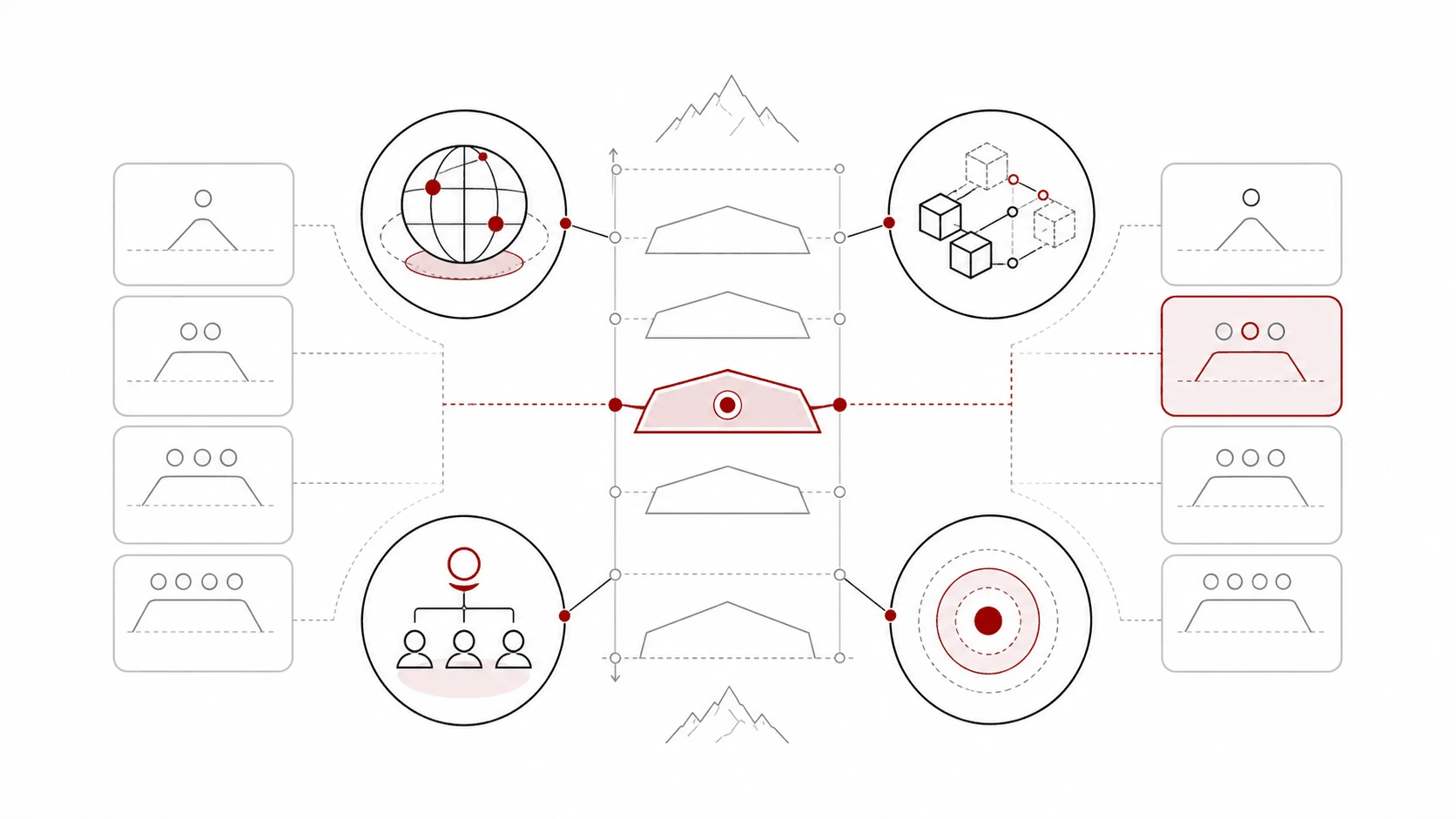
The calibration model
Use five lenses: scope, complexity, operating responsibility, influence, and authority. Each lens asks a different question. Together they tell you whether the role is mid-level execution, senior ownership, staff-shaped leadership, tech-lead-shaped delivery, specialist depth, or manager-shaped work.
| Lens | Question to answer | Senior evidence looks like |
|---|---|---|
| Scope | What area is this person expected to own? | A service, feature area, migration, reliability problem, or bounded product surface carried from framing through delivery. |
| Complexity | What makes the work hard beyond writing code? | Ambiguous requirements, correctness constraints, scale, legacy migration, integration partners, security, compliance, product trade-offs, or organizational dependencies. |
| Operating responsibility | What happens after launch? | On-call, SLOs, observability, incident response, rollback, support workflows, cost control, data repair, or reliability ownership. |
| Influence | Whose behavior must change for the work to succeed? | Mentoring, design review, standards, cross-team adoption, stakeholder negotiation, or repeated technical judgment that changes team practice. |
| Authority | What decisions can this person make or credibly shape? | Architecture, sequencing, rollout gates, risk acceptance, service boundaries, deprecation plans, technical standards, or trade-offs with product and operations. |
Do not average these lenses mechanically. A role can be senior because the operating consequence is high even when the team is small. Another role can be staff-shaped because the technical work is not exotic but the influence surface crosses many teams. A third can look senior by title while being mostly manager-shaped coordination.
The useful question is not “Do I have enough years?” It is “Can I show credible evidence at the altitude this role appears to require?”
Level shapes, not title ladders
Level calibration improves when you stop treating titles as a single ladder. Most hiring mistakes happen because the candidate and company are using the same title for different work shapes.
| Work shape | Typical center of gravity | Evidence the company will expect |
|---|---|---|
| Mid-level execution | Well-framed tasks, features, components, and local implementation choices. | Correct delivery, code quality, asking for help appropriately, and growing independence. |
| Senior ownership | Ambiguous service, feature-area, migration, reliability, or product problems owned end to end. | Framing, design trade-offs, implementation, rollout, operation, mentorship, and measurable impact. |
| Staff-shaped influence | Multi-team architecture, platform direction, standards, strategy, or migration programs. | Broad technical judgment, durable artifacts, adoption across teams, and influence without direct control. |
| Tech-lead-shaped delivery | Sequencing, coordination, review, mentoring, and delivery risk control while staying technically credible. | Project leadership, technical review, stakeholder alignment, and enough hands-on depth to avoid becoming only a coordinator. |
| Specialist depth | Deep domain expertise in an area such as ML systems, compilers, security, infrastructure, databases, or distributed systems. | Hard technical depth, domain-specific trade-offs, and evidence that the specialty changed outcomes. |
| Manager-shaped work | Staffing, performance, prioritization systems, team health, and delivery through people. | People leadership, hiring, coaching, execution systems, and organizational judgment rather than IC technical ownership. |
The same posting can mix shapes. “Senior Platform Engineer” may mean senior service ownership on a platform team. It may mean staff-shaped influence over product teams. It may mean a tech lead who writes some code but mainly coordinates migration. Calibration is how you find out before your interview stories point at the wrong job.
Where the bar appears
Start with the deconstructed job description, then mark each clue by level lens.
Title language is the weakest clue. Responsibility language is stronger. Repeated language is strongest. A single bullet saying “collaborate across teams” might be boilerplate. A posting that repeatedly mentions “standards,” “adoption,” “engineering-wide,” “technical direction,” and “multiple product teams” is signaling a broader influence bar.
Common signals:
| Posting language | Likely calibration |
|---|---|
| “Implement features from product requirements” | Mid-level or lower-scope senior, depending on ambiguity and independence. |
| “Own services from design through operation” | Hands-on senior ownership. |
| “Lead migration of a critical system while maintaining compatibility” | Senior or staff-shaped depending on number of teams, authority, and risk. |
| “Define standards across product engineering” | Staff-shaped influence unless the scope is a small team. |
| “Partner with engineering managers to improve delivery” | Tech-lead-shaped or manager-adjacent scope. |
| “Be the domain expert for fraud, ranking, security, or data infrastructure” | Specialist depth; ordinary senior evidence may not be enough. |
| “Work closely with product, design, sales, support, and customers” | Product and stakeholder judgment, especially in startups or enterprise software. |
| “Participate in on-call, own SLOs, and improve incident response” | Production ownership is central, not optional. |
After marking the clues, ask what evidence an interviewer would need to believe the claim. If the role says “define standards across product engineering,” a story about improving one team’s lint rules will not carry the level. If it says “own a checkout service in production,” a story about coordinating roadmap discussions will not replace hands-on system ownership.
The calibration brief
Before applying to an important role, write a one-page calibration brief. It should be short enough to update after the recruiter screen and concrete enough to shape the resume.
| Field | What to write |
|---|---|
| Apparent level shape | Senior ownership, staff-shaped, tech-lead-shaped, specialist, manager-shaped, or mixed. |
| Scope | The area the person appears expected to own: service, product surface, platform capability, migration, domain, or multiple teams. |
| Complexity | The constraints that make the work senior: scale, correctness, legacy systems, reliability, compliance, customers, or organization boundaries. |
| Operating responsibility | What the role must keep healthy after launch: on-call, SLOs, incident response, support, cost, security, or data quality. |
| Influence | Who must adopt, align, or change behavior: team, adjacent teams, product, support, customers, engineering managers, or the wider org. |
| Authority | Which decisions the role likely owns or shapes: design, rollout, standards, sequencing, roadmap trade-offs, risk acceptance. |
| My matching evidence | Three to five projects, incidents, migrations, designs, or leadership artifacts that prove the bar. |
| Gaps and risk | Where the company might see you below the requested level. |
| Questions to validate | Recruiter and hiring-manager questions that test the level hypothesis. |
The brief is not busywork. It prevents three costly errors: sending a generic resume, preparing the wrong project stories, and discovering level mismatch after the company has already framed you.
Examples and counterexamples
The title says senior, the work says broader
Posting excerpt:
Senior Platform Engineer, Developer Experience. Build and operate internal deployment tooling used by product engineering. Lead migration from bespoke service pipelines to a shared deployment platform. Define service templates and rollout standards. Partner with engineering managers to improve deploy reliability and developer velocity. Contribute code to platform services and review adoption plans from product teams.
Calibration:
| Lens | Reading |
|---|---|
| Scope | Broader than one service. The work touches a platform capability used by product teams. |
| Complexity | Migration, developer adoption, reliability, legacy pipelines, and organization boundaries. |
| Operating responsibility | Deployment reliability, platform health, rollback, support load, and operational visibility. |
| Influence | Product teams and engineering managers must adopt a shared path. |
| Authority | The role likely shapes standards, templates, rollout gates, and migration sequencing. |
This could be a senior platform role if the migration is bounded and a staff-shaped role if the person is expected to set engineering-wide direction. The title alone does not decide.
A well-calibrated candidate might say in the recruiter screen:
“This looks like senior platform ownership with possible staff-shaped influence. My strongest evidence is a deployment reliability migration where I owned the rollout plan, code changes, runbooks, and adoption with three teams. I would like to understand whether this role expects organization-wide platform strategy from day one or senior ownership of a defined migration.”
That answer does three useful things. It names the level hypothesis, ties it to evidence, and asks a non-defensive question that exposes the real bar.
Strong leader, thin hands-on proof
Consider a candidate whose recent work is mostly coordination: roadmap alignment, project planning, stakeholder updates, mentoring, and review meetings. That can be valuable senior or tech-lead-shaped evidence. It becomes risky when the target role expects daily technical ownership.
For a hands-on senior backend role, the candidate needs recent proof such as:
- designed a service boundary or data model;
- wrote or reviewed risky implementation code;
- debugged production behavior;
- chose rollout gates and rollback strategy;
- handled an incident or operational improvement;
- made a trade-off between reliability, delivery, cost, and product impact.
Without that detail, “I led the project” can sound like project management. The repair is not to pretend. The repair is to choose stories where leadership and technical judgment are inseparable:
“I led the migration, and my direct contribution was the compatibility design: dual writes for two billing flows, shadow validation against invoice totals, rollout gates by customer segment, and rollback criteria owned with support and finance.”
That sentence carries scope, complexity, operating responsibility, influence, and authority. It also gives an interviewer places to probe.
Authority is the hardest lens to fake
Many candidates can describe large systems. Fewer can explain what they were allowed or expected to decide. Authority does not have to mean unilateral control. Senior engineers often work through review, persuasion, and shared ownership. But the story must show real judgment, not proximity.
Weak authority claims sound like:
- “I was involved in architecture.”
- “I worked with the platform team.”
- “I helped drive the migration.”
- “I influenced quality.”
Stronger authority evidence names the decision and the mechanism:
- “I chose the idempotency model and defended it against simpler retry-only handling because duplicate charges were the highest customer-impact failure mode.”
- “I set the rollout gates for the migration: shadow validation first, one low-risk segment next, then a support-reviewed expansion.”
- “I wrote the API compatibility guide, reviewed the first four team plans, and blocked one adoption until the rollback path was testable.”
- “I negotiated with product to defer one feature because the service had no customer-visible failure state.”
When you cannot name the decision, artifact, or adoption path, treat the story as weak level evidence.
Operating responsibility changes the meaning of senior
Building a system and owning a system are different claims. Senior roles often require both. A candidate who speaks only about launch can under-level in a company that cares about reliability, security, cost, support, or compliance.
Operating responsibility appears in details:
- what alerted, who responded, and what changed after incidents;
- how SLOs, dashboards, runbooks, and support workflows affected design;
- how deploy safety, feature flags, rollback, and data repair were planned;
- how security, privacy, compliance, or auditability constrained shortcuts;
- how cost or capacity shaped architecture;
- how customer-visible failure states were handled.
This is especially important in infrastructure, commerce, fintech, healthcare, security, data, and platform roles. The company is not only asking whether you can design the happy path. It is asking whether it can trust you with the consequences of being wrong.
Down-level conversations are evidence conversations
A down-level can be unfair, but it is not always irrational. Companies may down-level because your interview evidence looked narrower than the target bar, your coding round did not support a hands-on senior claim, your examples lacked personal attribution, your recent work sounded too managerial, or the company defines the title more narrowly than your current employer.
Do not respond with “But I am already senior.” Respond by locating the evidence gap.
Useful questions:
- “Which part of the target level did the feedback not support: scope, technical depth, operating responsibility, influence, or decision authority?”
- “Was the concern about the scale of my examples or about my performance in a specific round?”
- “Is the role itself calibrated as senior ownership, staff-shaped influence, or tech-lead-shaped delivery?”
- “If I joined at the proposed level, what evidence would be required for promotion, and on what timeline?”
Then decide. Sometimes the lower level is a good trade if the team, compensation, growth path, and work are strong. Sometimes it is a sign to walk away. The important move is to make the decision from evidence rather than pride or fatigue.
Implications for reader decisions
Once you have a calibration hypothesis, every artifact should point in the same direction.
| Artifact or conversation | What calibration changes |
|---|---|
| Resume | Select bullets that prove the target scope, complexity, operating responsibility, influence, and authority. |
| Recruiter screen | Ask early whether the company means senior IC, staff-shaped, tech lead, specialist, or manager-adjacent scope. |
| Hiring-manager conversation | Validate first-six-month ownership, hands-on expectations, and decision rights. |
| Project deep dive | Choose a project whose altitude matches the role, not merely your most impressive-sounding project. |
| Behavioral stories | Show influence through mechanisms, artifacts, adoption, and conflict resolution. |
| System design preparation | Practice the domain constraints implied by the role, not generic architectures only. |
| Compensation discussion | Keep level, scope, and compensation band connected without treating title as the only proof. |
This is where chapter 12 hands off to the senior resume. A resume bullet is only strong for a role if it supports the level story the role actually requires.
Practice drills
Build a calibration brief
35 minAudit your strongest stories
25 minPrepare level questions
15 minSelf-check
You are ready to use level calibration in a live process when you can answer these questions with evidence:
- What work shape does this role appear to require?
- Which clues in the posting support that conclusion?
- What are your three strongest matching examples?
- Where is the level risk: scope, technical depth, operating responsibility, influence, authority, or domain depth?
- What question will you ask the recruiter to test the biggest uncertainty?
- Which resume bullets and project stories will you change because of the calibration?
- If the company down-levels you, what evidence gap will you ask about before deciding?
If you cannot answer those questions, pause before applying broadly. More applications will not fix unclear positioning.
One-page field reference
Field reference
Level calibration checklist
- Treat the advertised title as a clue, not the conclusion.
- Estimate the bar through scope, complexity, operating responsibility, influence, and authority.
- Classify the work shape: senior ownership, staff-shaped, tech-lead-shaped, specialist, manager-shaped, or mixed.
- Ask what evidence an interviewer would need to believe the role’s level claim.
- Prefer stories that show decisions, artifacts, adoption, trade-offs, production consequences, and measurable impact.
- Keep hands-on proof current for hands-on senior roles.
- Do not inflate team-local work into organization-wide strategy.
- Test level assumptions early with recruiter and hiring-manager questions.
- Treat down-level risk as an evidence problem before treating it as a negotiation problem.
- Align resume, recruiter screen, project deep dive, behavioral stories, and compensation expectations to the same level story.