Senior Engineering Interview Handbook / Chapter 4
What Senior Software Engineer Actually Means
A practical definition of senior software engineering for interviews: how to show senior-level scope, judgment, operational ownership, product awareness, and cross-team influence without relying on tenure or inflated titles.
Preparing audio…
Audio edition
What Senior Software Engineer Actually Means
Page tools
Why this concept changes preparation
The word “senior” creates false confidence and false anxiety.
Some candidates assume the title is earned by time. They have been employed for eight or ten years, have shipped many features, and have held the title before, so they expect the interview to recognize that history. Other candidates have done senior work without the title and understate themselves because their company leveled slowly or used different names.
Interviews do not resolve that confusion by counting years. They look for evidence.
A senior software engineer is trusted with problem areas, not merely tasks. The work is less fully specified. The consequences are broader. The engineer is expected to notice risk, shape the path, make trade-offs, communicate early, and leave the system or team better than they found it.
That is why seniority changes preparation. You are not only proving that you can code or explain a design. You are proving that your judgment operates at the size and ambiguity of the role.
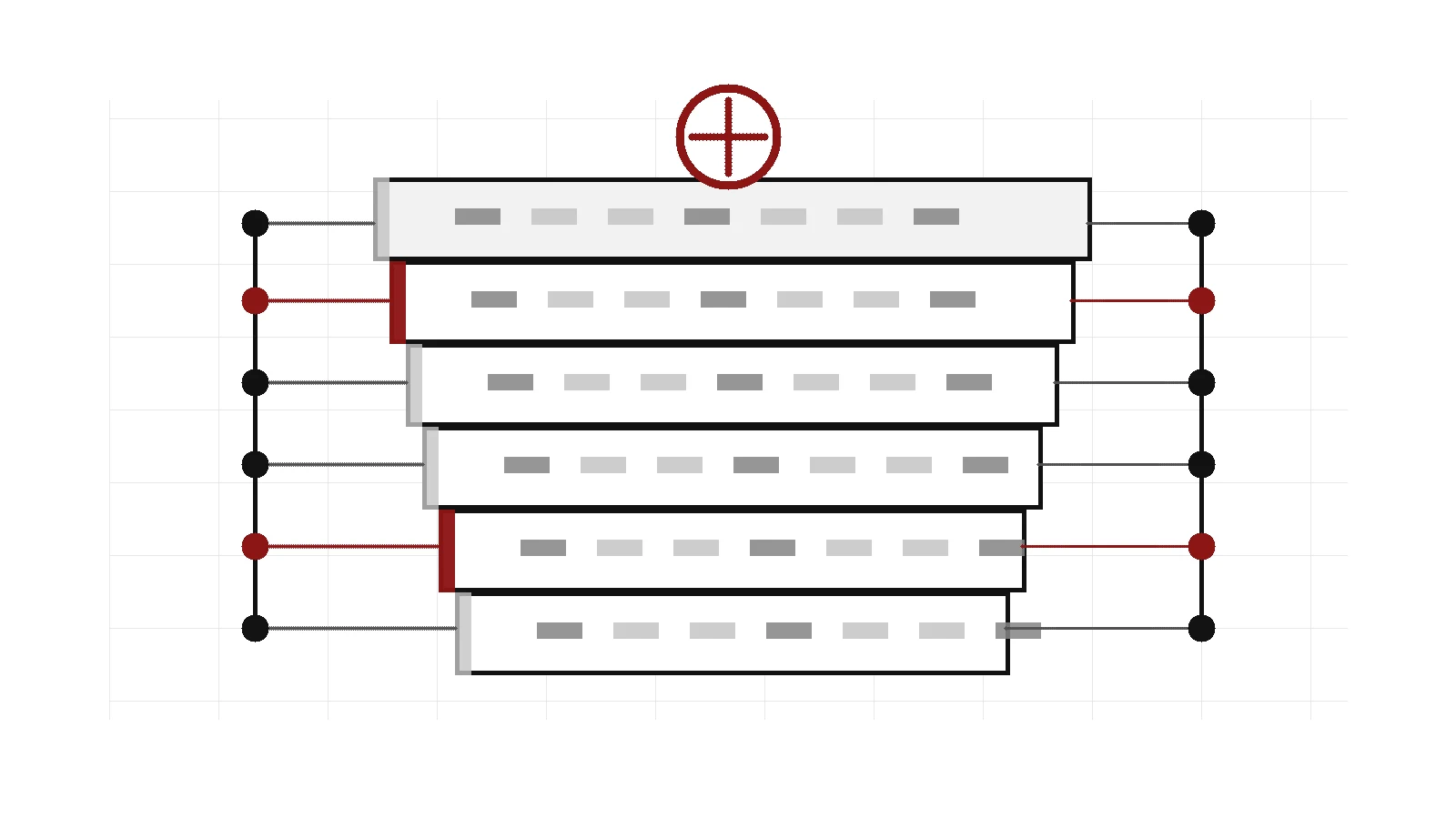
The seniority model
Use the model scope, judgment, leverage.
Scope asks what size and shape of problem you can own. A senior engineer sees more than the ticket: users, systems, adjacent teams, rollout paths, failure modes, cost, security, data quality, and long-term maintainability.
Judgment asks how you decide. Seniority appears in the way you separate facts from assumptions, choose between imperfect options, understand reversibility, explain trade-offs, and change course when evidence changes.
Leverage asks what becomes better because you were involved. Senior engineers still write code, but their contribution often extends beyond their own implementation: clearer interfaces, safer migrations, better tests, stronger review standards, useful runbooks, mentoring, reusable patterns, and reduced operational load.
In interviews, the strongest senior answers move through all three layers:
- Define the problem boundary.
- Name the constraints and risks.
- Explain the decisions that mattered.
- Show the delivery path and outcome.
- Describe what became easier, safer, or clearer afterward.
This keeps you out of two traps. One trap is the long project chronology where many things happened but no judgment is visible. The other is abstract senior language: “I drove alignment,” “I owned scalability,” “I improved architecture.” Those phrases only work when backed by concrete decisions and consequences.
How seniority appears across rounds
Seniority does not appear in one special interview round. It appears through the way you handle ordinary interview moments.
In coding rounds, seniority is not a more complicated algorithm. It is problem framing, test discipline, readable implementation, recovery from mistakes, and an ability to explain trade-offs without hiding uncertainty.
In system design, seniority appears when the design follows from requirements instead of memorized components. A senior candidate discusses data ownership, failure modes, bottlenecks, observability, rollout, and the cost of complexity.
In project deep dives, seniority appears through personal decisions. The interviewer needs to know what you owned, what alternatives existed, which constraints mattered, how you influenced others, what changed after launch, and what you learned.
In behavioral conversations, seniority appears as agency without heroism. You can describe conflict, ambiguity, failure, mentoring, and cross-team work without blaming everyone else or claiming every success as your own.
In hiring-manager conversations, seniority appears in calibration. You understand the role, ask about scope and expectations, discuss trade-offs plainly, and connect your experience to the problems the team actually has.
The surface changes. The bar is the same: can this person own meaningful work without requiring the organization to make every decision for them?
Examples and counterexamples
Prompt:
“What makes you a senior engineer?”
A weak answer lists duration and tools:
“I have been coding for nine years. I have worked with Java, Go, Kubernetes, Kafka, React, and AWS. I usually get assigned the hard projects and help junior engineers.”
That answer may be true, but it gives the interviewer little to score. Years are context. Tools are context. “Hard projects” is a claim. None of it yet proves scope, judgment, or leverage.
A stronger answer uses evidence:
“The clearest example is a payment retry redesign I led last year. The business goal was to recover failed recurring payments without creating duplicate charges or support noise. Product wanted aggressive retries, finance needed clean reconciliation, and support was already overloaded by unclear payment states.
I narrowed the problem to three outcomes: idempotent charge attempts, customer-visible state clarity, and a rollout that could be reversed by cohort. I chose a state-machine model with idempotency keys per billing cycle, explicit terminal states, and a delayed retry schedule controlled by feature flags. We rejected a simpler cron retry because it was faster to build but would have hidden duplicate-attempt risk and made reconciliation harder.
My direct contribution was the state model, API contract, migration plan, and launch runbook. Another engineer implemented most customer notification changes, and finance validated the reconciliation reports. We launched to 5 percent, found one provider-specific timeout behavior, adjusted the retry window, and then completed rollout. The result was a measurable recovery lift with no duplicate-charge incident during launch, and the state-machine pattern became the template for two later billing workflows.”
The second answer is not stronger because it sounds polished. It is stronger because the evidence is inspectable.
Scope is visible: billing reliability, customers, finance, support, provider behavior.
Judgment is visible: idempotency, state modeling, rollback by cohort, rejection of the simpler cron path.
Leverage is visible: a reusable workflow pattern, clearer reconciliation, and a launch runbook others could use.
Attribution is also visible. The candidate does not steal the whole project. They name their contribution and the contributions of others. That precision is a senior signal.
Decisions this chapter changes
Prepare seniority evidence as decisions, not slogans.
Instead of saying, “I owned the migration,” prepare the problem boundary, the alternatives, the trade-offs, the rollout, the outcome, and your exact contribution. Instead of saying, “I mentor people,” prepare evidence of durable leverage: review standards, examples, pairing plans, onboarding material, test fixtures, design feedback, or a teammate who took on larger scope because of your support.
Do not confuse management with senior engineering. Senior engineers influence people, but the evidence still needs technical substance. If every answer becomes stakeholder management with no design, production, or delivery judgment, the interviewer may hear you as drifting away from the engineering track.
Do not confuse seniority with maximal complexity. Senior judgment often means choosing the simpler design because the risk is low, the requirement is reversible, or the operational cost of a heavier system is not justified.
Do not hide production ownership. If launch, rollback, monitoring, security, data correctness, support load, or customer impact mattered, make that visible. Senior candidates are expected to understand what happens after merge.
Failure modes
Senior candidates under-level themselves when the evidence is real but the story shape is weak.
Common failure modes:
- relying on years of experience instead of decisions and outcomes;
- listing technologies instead of explaining constraints;
- narrating project chronology with no trade-offs;
- claiming broad ownership without precise attribution;
- presenting people coordination as a substitute for technical judgment;
- treating production concerns as someone else’s responsibility;
- describing every problem as requiring a large architecture rewrite;
- speaking only in business metrics while showing little engineering depth;
- speaking only in engineering detail while ignoring user, product, or delivery impact;
- having no example of cross-team influence or capability multiplication;
- offering no specific reflection about what changed afterward.
The strongest correction is to prepare fewer stories more deeply. One project with clear scope, judgment, leverage, and reflection is worth more than five shallow claims.
Diagnostic self-check
Take one project you plan to use in interviews and test it against this checklist.
| Question | What the interviewer needs to hear |
|---|---|
| What was the problem area? | Users, systems, teams, constraints, and stakes. |
| What ambiguity did you reduce? | Unknowns, assumptions, risks, and decisions needed. |
| What did you personally decide? | Alternatives considered and why one path won. |
| What risk did you own? | Failure modes, rollback, data correctness, security, cost, or operational burden. |
| How did you deliver it? | Sequencing, collaboration, testing, launch, and monitoring. |
| What changed? | Customer, business, reliability, cost, team, or developer-experience outcome. |
| What leverage remained? | Pattern, tool, standard, documentation, mentoring, runbook, or better default. |
| What did you learn? | A specific changed behavior, not a generic lesson. |
If a story cannot answer most of these questions, it may still be useful, but it is not yet a strong seniority story.
Field reference
Field reference
Senior software engineer
- Seniority is scope, judgment, and leverage.
- Scope: own problem areas, not only tasks.
- Judgment: make trade-offs under uncertainty and explain why.
- Production ownership: plan for failure, rollback, observability, security, data correctness, and operations.
- Delivery judgment: connect technical choices to user, product, cost, reliability, or team outcomes.
- Influence: align people without needing formal authority.
- Leverage: improve how others work through standards, tools, documentation, examples, reviews, and mentoring.
- Reflection: show how experience changed future behavior.
- Avoid claims that cannot be backed by decisions, consequences, and attribution.
Where the book goes next
This chapter defined seniority as evidence. The next chapter separates neighboring roles that are often confused: mid-level, senior, staff, tech lead, and engineering manager.
That distinction matters because interview failure often comes from aiming at the wrong bar. A candidate may answer like a strong mid-level engineer while targeting senior. Another may over-rotate into staff-level strategy when the role needs hands-on senior delivery. Another may describe engineering-management behavior for an individual-contributor role.
Chapter 5 gives you the calibration language to avoid those mismatches.