Chapter 4
What Senior Software Engineer Actually Means
A practical definition of senior software engineering for interviews: how to show senior-level scope, judgment, operational ownership, product awareness, and cross-team influence without relying on years of experience or inflated titles.
Jump around the book
On this page
Why this concept changes preparation
When an interviewer asks about seniority, they are not asking whether you have held a title for enough years. They are testing whether your work habits create senior-level evidence under pressure:
- Can you turn unclear goals into a tractable engineering plan?
- Can you make decisions with incomplete information and name the risk you are accepting?
- Can you own production outcomes after the code is merged?
- Can you explain business impact without pretending engineering is only a business exercise?
- Can you influence people who do not report to you?
- Can you raise the quality of the system and the team beyond your own ticket queue?
The senior bar is a scope bar, not an age bar. A candidate with eight years of narrow, fully specified feature work may interview below senior. A candidate with four years of broad ownership, strong judgment, and clear evidence of multiplying others may interview at senior in many organizations.
The interviewer is listening for a pattern: you notice context, choose constraints deliberately, make trade-offs explicit, prevent avoidable failure, and leave the system and team stronger than you found them.
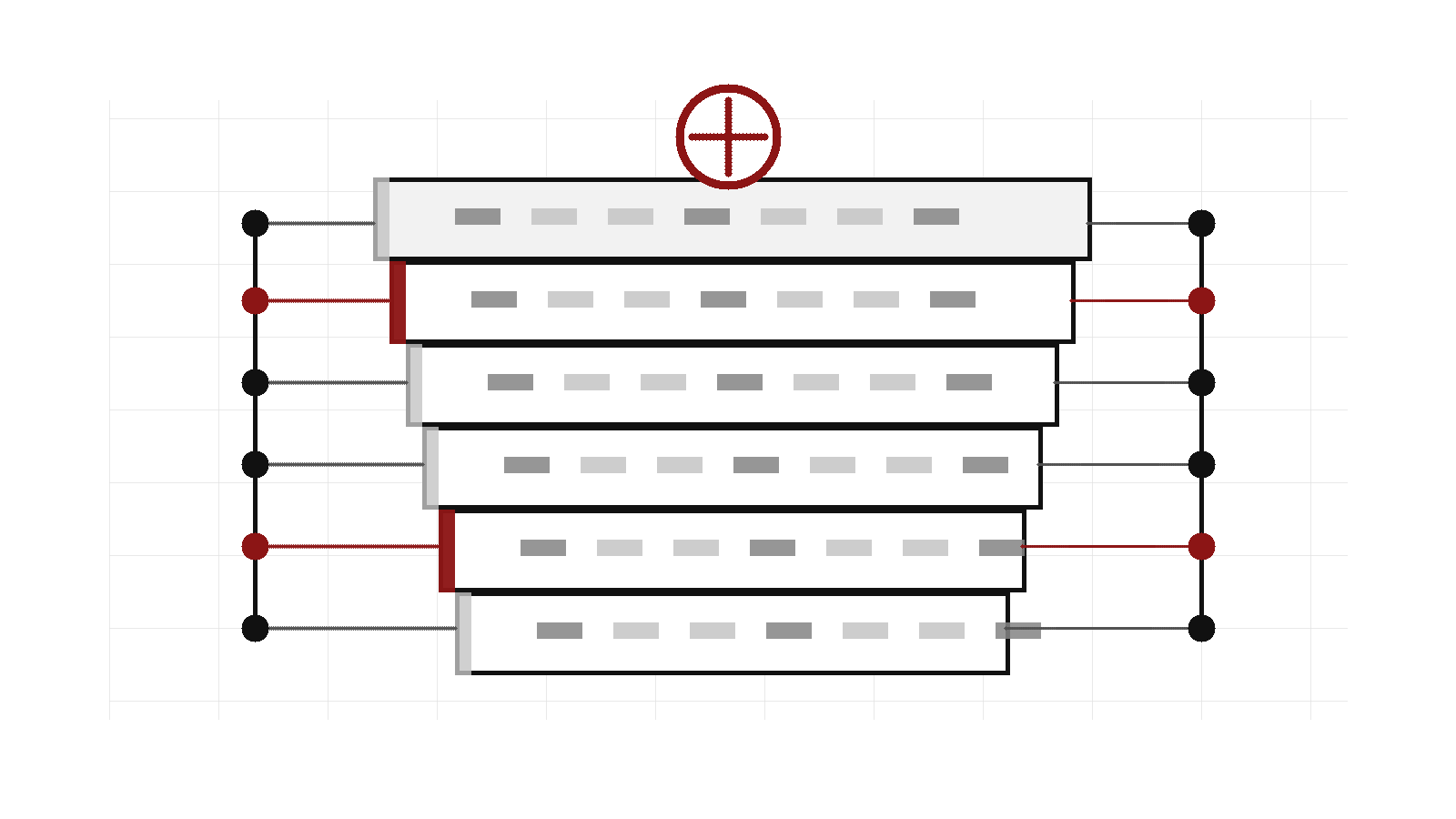
How the concept appears across rounds
Senior-level performance is visible in how you describe work:
- Scope: You can own a meaningful problem area, not just a task. You understand adjacent systems, customer impact, rollout paths, and operating cost.
- Autonomy: You do not wait for perfect instructions. You clarify the goal, identify unknowns, propose a path, and keep stakeholders informed.
- Ambiguity: You reduce ambiguity without pretending it disappears. You separate facts, assumptions, constraints, and decisions.
- Judgment: You make reversible and irreversible decisions differently. You know when to simplify, when to invest, and when to defer.
- Business impact: You connect technical choices to user value, reliability, revenue protection, risk reduction, velocity, or cost.
- Operational ownership: You think about observability, incident response, security, deployment, data quality, migrations, and rollback before launch.
- Cross-team influence: You can align API contracts, migration schedules, standards, and priorities across teams.
- Capability multiplication: You improve how other engineers work through mentoring, review quality, design templates, documentation, tooling, and better defaults.
A senior candidate does not need to claim heroic ownership of every success. In fact, over-claiming is a red flag. The strongest signal is precise attribution: “I owned the migration plan and rollback design; the storage team owned index changes; I coordinated the launch sequence and wrote the runbook.”
The scope-judgment-leverage model
Use the “scope, judgment, leverage” model.
Scope asks: What was the size and shape of the problem?
Judgment asks: What decisions did you make, and why were they reasonable under the constraints?
Leverage asks: How did your work improve outcomes beyond your own implementation?
In an interview, answer seniority questions by moving through those three layers:
- Define the problem boundary. Name the product, system, user, operational, and organizational constraints.
- Explain the decisions that mattered. Include alternatives you rejected and why.
- Show the leverage. Describe how you reduced risk, improved durability, sped up delivery, raised team quality, or made future work easier.
This keeps you away from two common traps. The first trap is narrating a long project timeline with no judgment. The second is using senior-sounding abstractions without concrete evidence.
Essential knowledge
Seniority is contextual
Companies use titles differently. “Senior” at one company may map to “Software Engineer II” or “Staff” somewhere else. The durable part is the expected behavior:
- owns ambiguous work with limited supervision;
- makes locally important technical decisions;
- collaborates across functions and teams;
- understands production and delivery consequences;
- improves the team through review, mentoring, documentation, and standards;
- communicates risk early and clearly.
Treat company-specific levels as calibration data, not universal truth.
Seniority is not encyclopedic knowledge
A senior engineer does not know every framework, algorithm, cloud service, or distributed systems paper. Seniority shows in how quickly and safely they learn, how well they ask questions, and how responsibly they decide under uncertainty.
In interviews, it is acceptable to say, “I have not used that exact system in production, but I would reason about it this way.” Then reason clearly.
Seniority is not management
Senior engineers influence technical direction and team execution while remaining accountable for engineering work. They may mentor, coordinate, and lead projects, but their core evidence remains technical judgment and delivery. Do not turn every answer into people management unless the role is explicitly a manager or tech lead hybrid.
Seniority includes saying no
Senior engineers protect focus and quality. They can say:
- “That launch date is possible only if we defer this non-critical feature.”
- “We should not migrate both the storage layer and API contract in the same release.”
- “The design is elegant, but it increases operational load for a low-value edge case.”
- “We can accept this risk for beta, but not for general availability.”
The point is not stubbornness. The point is responsible trade-off ownership.
Seniority is measurable, but not always in vanity metrics
Useful evidence includes:
- reduced incident rate or blast radius;
- improved latency, availability, cost, conversion, or developer cycle time;
- migration completed without customer-visible downtime;
- support volume reduced by better product behavior;
- review latency reduced by better standards;
- onboarding time reduced by better documentation and examples;
- roadmap risk reduced by an incremental delivery plan.
Avoid vague claims like “made the system scalable” unless you can explain the baseline, constraint, decision, and result.
Examples and counterexamples
Prompt: “What makes you a senior engineer?”
Weak answer:
“I have been coding for nine years. I have worked with Java, Go, Kubernetes, Kafka, React, and AWS. I usually get assigned the hard projects and help junior engineers.”
Why it misses: It lists duration and tools, but not scope, judgment, or outcomes.
Senior answer:
“The clearest evidence is a payment retry redesign I led last year. The business goal was to recover failed recurring payments without creating duplicate charges or support noise. The ambiguity was that product wanted aggressive retries, finance wanted clean reconciliation, and support was already overloaded by unclear payment states.
I narrowed the problem to three outcomes: idempotent charge attempts, customer-visible state clarity, and a rollout that could be reversed by cohort. I chose a state-machine model with idempotency keys per billing cycle, explicit terminal states, and a delayed retry schedule controlled by feature flags. We rejected a simpler cron retry because it was faster to build but would have hidden duplicate-attempt risk and made reconciliation harder.
My direct contribution was the state model, API contract, migration plan, and launch runbook. Another engineer implemented most of the customer notification work, and finance validated the reconciliation reports. We launched to 5 percent, found one provider-specific timeout behavior, adjusted the retry window, and then completed rollout. The result was a measurable recovery lift with no duplicate-charge incident during launch, and the state-machine pattern became the template for two later billing workflows.”
Why it works:
- Scope: payment reliability, customer impact, finance, support, provider behavior.
- Autonomy: narrowed ambiguous goals into explicit outcomes.
- Judgment: rejected a faster but riskier approach.
- Production ownership: idempotency, flags, rollout, runbook, provider-specific behavior.
- Cross-functional influence: product, finance, support.
- Capability multiplication: created a reusable workflow pattern.
Annotated calibration conversation
Interviewer: “You have the title Senior Software Engineer now. What does that mean in your day-to-day work?”
Candidate: “For me it means owning problem areas, not only implementation tasks. I still write code, but I am expected to clarify ambiguous requirements, choose a technical direction, surface risks early, and help other engineers make better decisions.”
Annotation: Starts with behavior, not tenure. Keeps the role technical.
Interviewer: “Can you give me a concrete example?”
Candidate: “A recent example was our account deletion workflow. Initially it was framed as a backend endpoint. Once I traced the dependencies, it was really a compliance, data retention, customer support, and async workflow problem. I wrote the design doc, split hard-delete and retention cases, defined audit events, and proposed a staged rollout with shadow-mode validation.”
Annotation: Reframes a task into a broader problem area. This is senior signal.
Interviewer: “What decision did you personally make?”
Candidate: “The most important decision was to make deletion a durable workflow rather than a synchronous request. A synchronous endpoint looked simpler, but it would have timed out on accounts with many workspace resources and created partial deletion risk. The workflow model added implementation cost, but gave us retries, auditability, and a clearer operator view.”
Annotation: Names an alternative, trade-off, and reason. Avoids vague “I designed the architecture.”
Interviewer: “How did you know it was worth the extra complexity?”
Candidate: “I treated it as an irreversible user trust area. A partial deletion or invisible failure would be expensive to repair and hard to explain. For a low-risk profile update, I would not choose the same machinery. Here the reliability and audit requirements justified it.”
Annotation: Shows context-sensitive judgment. Seniority is not always choosing the heavier design.
Interviewer: “How did you involve the team?”
Candidate: “Before implementation I held a design review with backend, data, support, and security. During delivery I paired with a mid-level engineer on the workflow executor and asked them to own the test matrix. After launch, we turned that matrix into a checklist for future data lifecycle changes.”
Annotation: Shows influence and capability multiplication without claiming to manage everyone.
Interviewer: “What would you do differently?”
Candidate: “I would involve support earlier. We designed good internal events, but the first support-facing status labels were too implementation-specific. We fixed them before broad rollout, but earlier review would have saved a week.”
Annotation: Reflection is specific and credible. It does not collapse into self-blame or blame shifting.
How senior evidence differs by maturity
| Prompt | Weak response | Mid-level response | Senior response |
|---|---|---|---|
| “Why are you senior?” | “I have many years of experience and know the stack.” | “I deliver complex features independently and help teammates when asked.” | “I own ambiguous problem areas, make trade-offs explicit, manage production and delivery risk, and improve team execution beyond my own code.” |
| “Tell me about a hard project.” | Long chronology, unclear personal contribution. | Clear implementation story with some complexity. | Problem framing, constraints, key decisions, alternatives, rollout, impact, team influence, and reflection. |
| “How do you handle ambiguity?” | “I ask the PM for requirements.” | “I ask clarifying questions and write tickets.” | “I separate knowns, assumptions, risks, and decision points; propose a reversible path; and create alignment before expensive work.” |
| “How do you mentor?” | “I answer questions and review PRs.” | “I help juniors with tasks and explain patterns.” | “I create durable leverage: review standards, examples, pairing plans, design feedback, and graduated ownership.” |
| “How do you think about production?” | “QA tests it and we monitor logs.” | “I add metrics and alerts.” | “I design for failure modes, rollback, observability, security, data correctness, and operational ownership before launch.” |
Decisions this model should change
- Equating seniority with years of experience.
- Listing technologies instead of decisions and outcomes.
- Claiming ownership of broad team results without precise attribution.
- Presenting management activities as a substitute for technical judgment.
- Treating production concerns as someone else’s responsibility.
- Describing every problem as solved by a large architecture rewrite.
- Framing ambiguity as annoyance rather than normal senior work.
- Having no example of cross-team coordination.
- Having no example of mentoring, review standards, or team leverage.
- Speaking only in business metrics while showing little engineering depth.
- Speaking only in engineering details while ignoring customer or delivery impact.
- Showing no changed opinion, lesson, or follow-up from past work.
Diagnostic drills
Drill 1: The seniority proof in five minutes
Timebox: 5 minutes.
Write a spoken answer to “What makes you a senior engineer?” Use this structure:
- One-sentence definition of seniority.
- One project that proves scope.
- One decision that proves judgment.
- One outcome that proves impact.
- One practice that proves capability multiplication.
Score yourself immediately against the rubric below.
Drill 2: Replace tenure with evidence
Timebox: 12 minutes.
Take three resume bullets or project notes that rely on years, tools, or vague ownership. Rewrite each one to include:
- problem context;
- constraint;
- decision;
- result;
- personal contribution.
Example conversion:
“Led Kafka migration for billing events.”
Better:
“Led the billing event migration from synchronous webhooks to Kafka-backed delivery by defining idempotent event contracts, staging dual-write validation, and coordinating finance reconciliation; completed rollout without duplicate invoice events.”
Drill 3: Ambiguity map
Timebox: 15 minutes.
Choose one past project. Draw four columns:
- Known facts.
- Assumptions.
- Risks.
- Decisions needed.
Now add the senior action for each risk: experiment, design review, stakeholder decision, rollout guardrail, monitoring, or explicit deferral.
Drill 4: Capability multiplication inventory
Timebox: 10 minutes.
List five ways your work made others more effective. At least two must not be one-on-one mentoring. Look for examples such as templates, test fixtures, dashboards, runbooks, coding standards, review checklists, onboarding material, or better service boundaries.
Self-check rubric
Score each dimension from 1 to 5.
| Dimension | 1 - Weak | 3 - Competent | 5 - Senior-ready |
|---|---|---|---|
| Scope | Describes assigned tasks only. | Describes a feature or component. | Describes a problem area with users, systems, stakeholders, and constraints. |
| Autonomy | Waits for direction. | Executes independently once requirements are clear. | Clarifies ambiguity, proposes a path, and keeps alignment as facts change. |
| Judgment | Says what was built. | Names some trade-offs. | Explains alternatives, decision criteria, reversibility, and risk ownership. |
| Production ownership | Mentions testing or monitoring generically. | Covers basic metrics, alerts, and rollout. | Covers failure modes, rollback, data correctness, security, observability, and operations. |
| Impact | Uses vague success language. | Gives a useful output metric. | Connects technical work to customer, business, reliability, cost, or team outcomes. |
| Influence | Helps when asked. | Coordinates within the team. | Aligns across functions or teams and improves future execution. |
| Reflection | Gives no lesson or a generic lesson. | Names a plausible improvement. | Shows a specific changed behavior supported by evidence. |
Interpretation:
- 7-17: Your seniority story will likely under-level you.
- 18-27: You have usable evidence, but need sharper decisions and impact.
- 28-35: You can make a credible senior case if you communicate concisely.
A one-page field reference
Seniority in one sentence
A senior software engineer owns ambiguous problem areas, makes responsible technical decisions, manages production and delivery risk, and increases the effectiveness of the team.
The evidence stack
Use this sequence in interviews:
- Problem: What mattered and why?
- Scope: Which users, systems, teams, and constraints were involved?
- Decision: What options existed, and what did you choose?
- Risk: What could go wrong, and how did you reduce or accept it?
- Delivery: How did you sequence, test, roll out, and observe the work?
- Impact: What improved?
- Leverage: What became easier for other people afterward?
- Reflection: What would you change next time?
Senior phrases that are credible when backed by evidence
- “The key trade-off was…”
- “The risk we chose to accept was…”
- “I treated this as reversible until…”
- “I aligned with X because their constraint changed the design…”
- “My personal contribution was…”
- “The result was…”
- “The reusable artifact was…”
Phrases to avoid
- “I just owned everything.”
- “It was scalable.”
- “We used best practices.”
- “I have always been the go-to person.”
- “The business wanted it, so we built it.”
- “That was QA’s responsibility.”