Chapter 1
The Interview Is a Sampled Performance
Learn why capable senior engineers can underperform in interviews, how false negatives happen, and how to treat preparation as evidence production rather than trivia rehearsal.
Jump around the book
On this page
Why this concept changes preparation
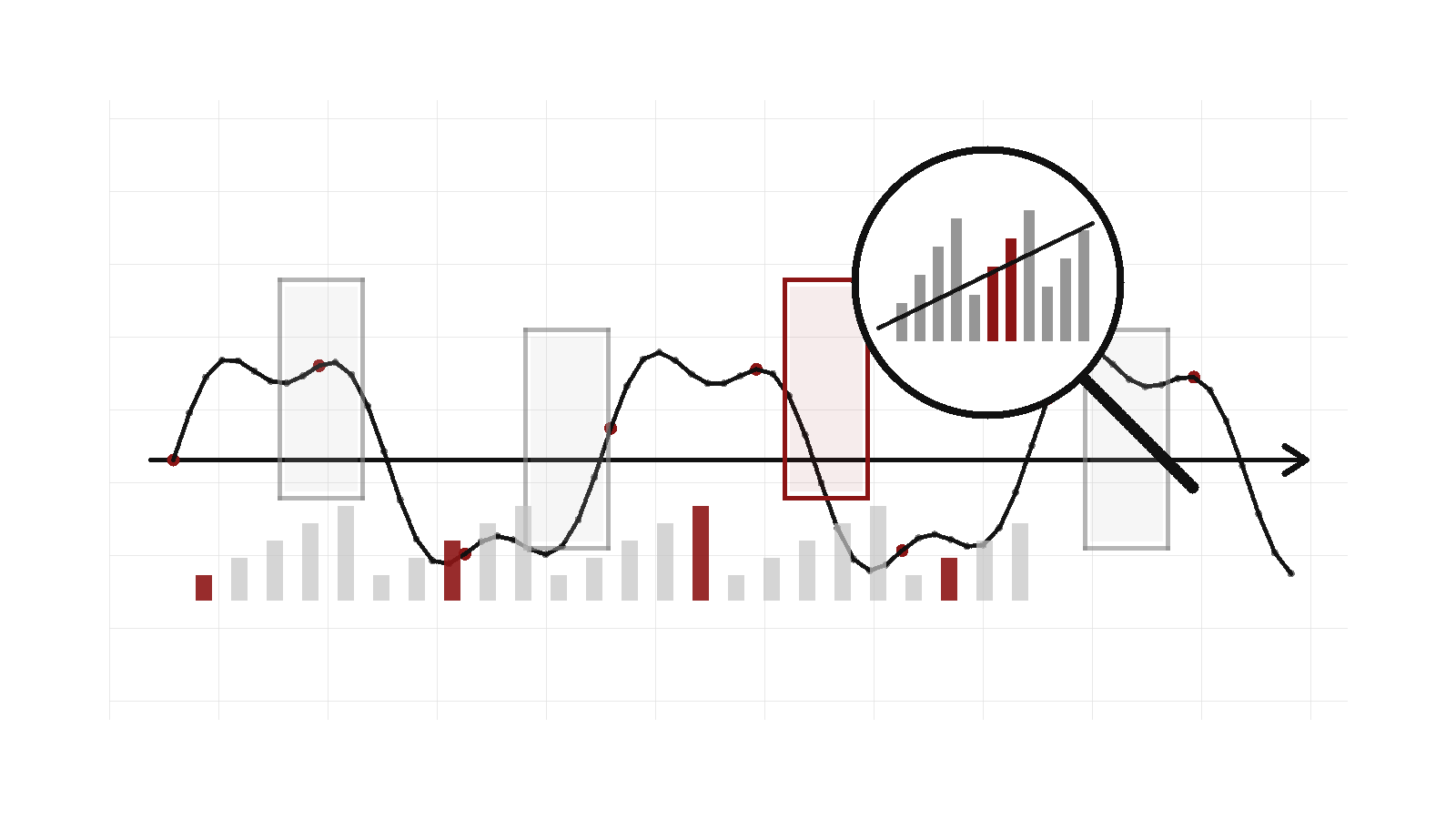
A senior interview is not a complete measurement of your engineering ability. It is a short, artificial sample of how much useful signal you can produce while someone else controls the prompt, clock, tools, and scoring context.
That distinction matters. A strong engineer can fail because the interview only sees a narrow slice of their work: a 45-minute coding problem, a one-hour system design conversation, a behavioral story, or a compressed project deep dive. The interviewer rarely sees months of ownership, the quality of your design reviews, how you recover after incidents, or the judgment you show when requirements shift.
The interview is therefore testing two overlapping capabilities:
- Engineering judgment: whether you can reason, build, design, operate, lead, and reflect at the expected level.
- Interview performance: whether you can make that judgment visible quickly, clearly, and under constraint.
Preparation should not turn you into a scripted performer. It should reduce avoidable signal loss. The goal is to make the work you are already capable of doing legible inside the interview format.
How the model appears across rounds
Senior-level candidates do not treat the interview as a quiz they must dominate. They treat it as a structured collaboration with a high signal-to-noise requirement.
In practice, that means they:
- Clarify the task before solving it.
- State assumptions instead of silently inventing requirements.
- Start with a simple baseline when appropriate, then improve it.
- Make trade-offs explicit.
- Surface risk, failure modes, testing strategy, and operational consequences.
- Explain decisions at the right level of detail for the round.
- Recover visibly when corrected or stuck.
- Connect technical choices to users, teams, systems, and business outcomes.
- Use examples with personal ownership and measurable impact.
- Leave the interviewer with evidence, not just confidence claims.
Senior performance is not perfection. Interviewers expect mistakes. What matters is whether your process makes mistakes discoverable, bounded, and recoverable.
The sampled-performance model
Think of every interview round as a sampling pipeline:
- The company chooses a prompt.
- You ask questions and form a model.
- You produce observable behavior: code, diagrams, decisions, stories, tests, trade-offs.
- The interviewer maps that behavior to scoring signals.
- A debrief compares your evidence with the role’s level expectations.
You control the middle of the pipeline. You cannot control the exact prompt, interviewer style, or debrief politics. You can control how much relevant evidence you make observable.
Use the seven senior signals as the evidence checklist:
| Signal | Evidence the interviewer can observe |
|---|---|
| Problem framing | You turn ambiguity into constraints, goals, and a tractable plan. |
| Coding fluency | You write correct, readable, testable code without excessive assistance. |
| Architectural judgment | You design systems and defend meaningful trade-offs. |
| Production judgment | You reason about failure, security, observability, operations, and cost. |
| Delivery judgment | You connect engineering decisions to user, product, and business outcomes. |
| Leadership and influence | You raise the effectiveness of people and systems beyond your assigned tasks. |
| Communication and reflection | You explain decisions, respond to feedback, and learn from outcomes. |
The signals are partially multiplicative. Strong architecture cannot fully compensate for unreadable code, weak ownership stories, poor communication, or an inability to respond to feedback. Your preparation should raise the floor across all sampled signals.
Essential knowledge
False negatives are normal
A false negative happens when a capable candidate fails to produce enough evidence in the interview. Common causes include unfamiliar format, poor time management, an unlucky prompt, stress, overexplaining, underexplaining, or failing to map real work to senior-level evidence.
False negatives are not proof that the process is fair or unfair in every case. They are a practical reason to train the performance surface.
Interview fluency is not fake seniority
Interview fluency means you can operate inside the format:
- You know how to structure a coding round.
- You can draw a design in stages.
- You can narrate a project without drowning the interviewer in context.
- You can answer behavioral questions with evidence rather than slogans.
- You can ask for clarification without stalling.
This is not the same as memorizing scripts. It is a translation layer between real engineering ability and the interview’s sampling constraints.
Evidence beats assertion
Weak candidates often assert qualities: “I am a strong owner,” “I care about reliability,” “I mentor people.” Senior candidates make those qualities visible:
- “The migration had three consumer teams, so I split the rollout by read path, write path, and backfill ownership.”
- “We accepted temporary duplication because the rollback path mattered more than schema purity.”
- “After the incident, I changed the deploy gate and moved the alert from symptom-based to SLO-based.”
The interviewer is scoring behavior, not intent
Good intent that never appears in your answer cannot be scored. If you considered testing, say how. If you see an operational risk, name it. If you are trading off consistency against latency, state the trade-off and your reversal condition.
Examples and counterexamples
Prompt:
“Design a system that sends transactional notifications to users.”
Candidate A is a capable backend engineer but treats the interview like an architecture dump.
They immediately draw services: API gateway, notification service, Kafka, worker pool, database, email provider, SMS provider. They discuss retries and scaling. They do not ask about notification types, delivery guarantees, legal constraints, user preferences, idempotency, abuse, or operational readiness until the interviewer prompts them.
The design may contain good pieces, but the sampled evidence is uneven. The interviewer sees architecture vocabulary, but less problem framing, product judgment, and production judgment.
Candidate B starts differently:
“Before drawing components, I want to know whether these are transactional messages like password resets and receipts, or engagement messages like promotions. That changes reliability, consent, latency, and unsubscribe behavior. I will assume transactional messages for now unless you want a broader notification platform.”
Then they define requirements, choose a baseline architecture, explain idempotent send requests, discuss provider failure, delivery status, user preferences, auditability, and operational dashboards. They still may not design the perfect system, but the sampled evidence is stronger across more senior signals.
The difference is not intelligence. It is evidence shape.
Annotated example: making evidence visible
Interviewer:
Tell me about a time you improved a system’s reliability.
Candidate:
I led a change to our invoice generation path after we had repeated queue backlogs near month-end. The visible symptom was delayed invoices, but the real issue was that retries and new work shared the same queue.
Annotation: The candidate frames the problem and distinguishes symptom from cause.
Interviewer:
What did you do?
Candidate:
First I measured where time was going. About 12 percent of jobs caused 70 percent of retry volume because one downstream tax API had intermittent latency. I split retries into a separate queue, added idempotency keys to invoice writes, and put a circuit breaker around the tax call. We also added an SLO for invoice completion within two hours.
Annotation: The answer gives evidence of diagnosis, production judgment, data, and reliability trade-offs.
Interviewer:
Why not just add more workers?
Candidate:
We considered that and did it temporarily, but it was not the core fix. More workers increased pressure on the failing dependency and made duplicate invoice risk worse. The durable fix was isolating retries and making invoice writes safe to repeat.
Annotation: The candidate handles a challenge without defensiveness and explains why a simpler option was insufficient.
Interviewer:
What changed afterward?
Candidate:
Month-end invoice completion moved from roughly six hours in the worst case to under ninety minutes. More importantly, the next provider slowdown degraded only delayed tax enrichment, not the whole invoice pipeline. If I did it again, I would add the SLO and retry isolation earlier instead of waiting for the second incident.
Annotation: The candidate closes with impact and reflection. That makes the story scoreable.
Weak, mid-level, and senior responses
| Prompt | Weak response | Mid-level response | Senior response |
|---|---|---|---|
| “Why do experienced engineers fail interviews?” | “Interviews are random and bad.” | “They may not practice enough or may get nervous.” | “The process samples visible evidence under constraint. Experienced engineers fail when real ability does not translate into observable signals: unclear framing, hidden reasoning, weak timeboxing, thin project evidence, or poor recovery after feedback.” |
| “How will you prepare?” | “I will grind problems and review system design.” | “I will practice coding, design, and behavioral questions.” | “I will diagnose my current signal gaps, pick a route based on timeline, practice each round format, run mocks, track failure modes, and use readiness gates before scheduling my highest-value loops.” |
| “Tell me about your seniority.” | “I have eight years of experience and have led projects.” | “I owned services and mentored teammates.” | “My strongest evidence is scope under ambiguity: I led a cross-team migration, made rollback and observability part of the plan, mentored two engineers through implementation, and changed the release process after an incident.” |
Implications for reader decisions
Watch for these patterns:
- Treating every round as a memory test.
- Solving before clarifying.
- Speaking in abstractions without concrete evidence.
- Assuming the interviewer sees unstated reasoning.
- Over-indexing on one strength, such as algorithms or architecture, while ignoring leadership and communication.
- Hiding uncertainty instead of bounding it.
- Treating hints as threats.
- Using senior-sounding vocabulary without decisions, trade-offs, or outcomes.
- Blaming the process without adjusting preparation.
- Practicing only what feels comfortable.
The strongest correction is to ask: “What signal did I make visible, and what signal did I leave hidden?”
Timed drills
Evidence replay
20 minSignal labeling
15 minHidden reasoning audit
25 minRecovery practice
15 minSelf-scoring rubric
Score yourself from 1 to 5 on each dimension.
| Dimension | 1 | 3 | 5 |
|---|---|---|---|
| Framing | Jumps into answers. | Clarifies obvious requirements. | Converts ambiguity into goals, constraints, assumptions, and plan. |
| Evidence | Uses claims. | Gives examples but misses impact or trade-offs. | Gives concrete actions, alternatives, outcomes, and reflection. |
| Time control | Runs out of time often. | Finishes some rounds with uneven depth. | Allocates time intentionally and adjusts when behind. |
| Signal coverage | Shows one strength only. | Covers the main round signal. | Makes multiple relevant senior signals visible. |
| Recovery | Freezes or becomes defensive. | Accepts hints but loses structure. | Updates calmly and preserves forward motion. |
| Reflection | Ends answers abruptly. | Mentions lessons vaguely. | States what changed in future behavior or systems. |
Readiness gate: average 4 or higher, with no dimension below 3, before relying on live interviews as your primary practice environment.
One-page field reference
Field reference
Sampled performance checklist
- The interview sees a sample, not your whole career.
- Your job is to make relevant evidence visible.
- Clarify before solving.
- State assumptions and reversal conditions.
- Start simple, improve deliberately, and explain why.
- Make testing, failure modes, operations, and trade-offs explicit when relevant.
- In stories, include context, stakes, alternatives, action, impact, and reflection.
- Treat hints as information, not judgment.
- After every practice round, ask: Which senior signals were visible? Which were hidden?